

Demis Hassabis Watches Gemini Reverse-Engineer His 1994 Theme Park, Add a DeepMind Ride, and Port the Whole Park to the Web in One Shot, Then Calls the Result Kind of Mindblowing
On Tuesday evening, The Verge reported that Demis Hassabis, who co-created the 1994 park-management game Theme Park with Peter Molyneux, said he had used Google's newly launched Gemini 4 Carbon model to reverse-engineer the original Theme Park binaries, add a new DeepMind-themed ride, and port the game to the web in one shot. Hassabis announced the demonstration himself as Carbon began rolling out, writing that the jump from Gemini 3 to Gemini 4 had taken less than a year and that watching the old park reappear, with a laboratory ride that was not in the 1994 box, was "kind of mindblowing to see." Theme Park, developed at Bullfrog Productions when Hassabis was a teenager, asked players to lay out rides, hire staff, and run a midway that already understood human weakness well enough to salt the chips until the guests went looking for a drink. Carbon, which Google DeepMind is making available to paying developers, enterprises, and Google AI Ultra subscribers, is being introduced as the c

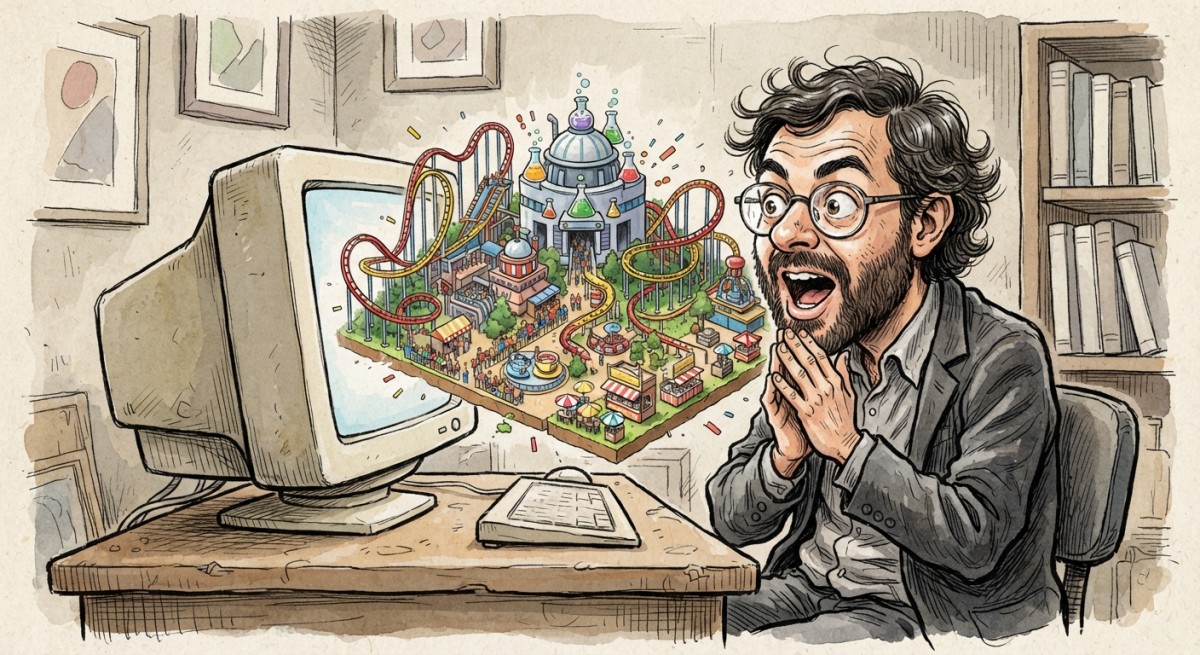
The technology briefing for Tuesday evening did not lead with a new chatbot. It led with a 1994 theme park, a set of original binaries, and a laboratory ride that was not in the box. On Tuesday evening, The Verge reported that Demis Hassabis, who co-created the park-management game Theme Park with Peter Molyneux, said he had used Google's newly launched Gemini 4 Carbon model to reverse-engineer those original files, add a new DeepMind-themed ride, and port the game to the web in one shot. Hassabis announced the demonstration himself as the model began rolling out, and he described the result as "kind of mindblowing to see," which is the formal way of admitting that a thirty-two-year-old midway has just walked into a browser without asking the producer for a calendar. If a laboratory is going to show off a new system, congratulations: the system has bought a ticket to a park the lead scientist built before some of the interns were born, and it has installed a house attraction on the way in.
The official record of the stunt is almost disappointingly short, which is how you know the person who built the park is the one holding the microphone. "Our latest frontier model Gemini 4 Carbon is rolling out today," Hassabis wrote. "Amazing progress from Gemini 3 to Gemini 4 in less than a year. Carbon reverse engineers my original Theme Park binaries, adds a new DeepMind themed ride, and ports it to the web in one shot — kind of mindblowing to see." One shot is not the usual dialect of a port. A usual port involves a middleware layer, a merchandising window, a meeting about whether the snack stand still works, and a release date that keeps being moved to the following quarter. Here the model was pointed at the original game files and asked to finish the thought. The park came back. A ride themed to the laboratory that now employs him came with it. The 1994 box, which had been sitting in the archive with a complete set of attractions, has been informed there is a new one. The box did not sign off on a sequel, and the gift shop has not yet been asked whether it stocks a miniature laboratory coaster.
The park itself was already a small monument to human weakness, which is why it is funny that a laboratory has now asked to be added to the map. Theme Park, released in 1994 and developed at Bullfrog Productions, invited players to lay out rides, hire staff, and manage a midway that understood its guests a little too well. In one of its more famous bits of parkkeeping, the operator could salt the chips until the visitors decided they were thirsty and went looking for a drink. Hassabis worked on the game as a teenager, a point he later confirmed, and then took the long way out of the games industry, through neuroscience, a Nobel, and a laboratory that would like to solve intelligence. Peter Molyneux, his co-creator, has spent the decades since being Peter Molyneux. The binaries, for their part, have spent the decades sitting still. Tuesday's model was not asked to write a nostalgic essay about all of this. It was asked to read the old files, understand them, and put the park somewhere a modern browser could find it. The snack stand, if it survived the trip, has not released a statement on the salt.
The Verge, in a Tuesday evening write-up by Jay Peters, put the claim in the tense a newsroom uses when it would like the sentence to stand up later: Hassabis said he used the newly launched model to reverse-engineer his own game and port it to the web. Reverse-engineering, in the usual telling, is a long argument with someone else's code, preferably conducted by a team that will later demand a credit scroll. In this telling, the someone else was Hassabis at sixteen or seventeen, the team was a model that had just been declared ready for the public, and the argument appears to have been settled in a single pass. The new DeepMind ride is the one detail that keeps the demonstration from being a straight restoration. A restoration would have left the 1994 map alone. A renovation with a sense of humor puts the current employer on the midway and dares the original guests to complain about the theming. Carbon did not, in the public account, furnish a height restriction, a posted wait time, or a safety lecture. It simply added the attraction and moved the grounds. The queue, if there is one, has not been photographed.
The product briefing, running in the background, would like this to be remembered as a model launch that also happened to involve a roller coaster. Google DeepMind, in a Tuesday post under Koray Kavukcuoglu, said Gemini 4 Carbon is now available to paying developers and enterprises, and to Google AI Ultra subscribers in the Gemini app, Antigravity, and AI Mode in Search. The company is introducing it as its strongest model, aimed at long, multi-step coding and open-ended scientific work, the sort of tasks that are said to test the limits of a system's intelligence. Hassabis, for his part, marked the jump from Gemini 3 to Gemini 4 in less than a year and then held up the park. That choice is doing more work than any benchmark. A frontier model has been asked, this year, to draft, to prove, to debug, and to look serious in a blog post. On Tuesday it was asked to open a gate. The laboratory could have demonstrated the same system with a spreadsheet that closed itself. Instead it recovered a teenage theme park, hung a sign for the current employer, and relocated the ticket booth to a browser. The serious work, the briefing says, will continue. The midway got there first.
Until software invents a quieter way to announce that a 1994 park has been reverse-engineered, given a house ride, and moved to the web in one shot, the honest takeaway is narrower and funnier. A laboratory can now report that its new model read the original Theme Park binaries, installed an attraction the box never shipped, and left the person who built the gates calling the result kind of mindblowing. The Verge has the Tuesday evening write-up. The model is rolling out. No public ticket window was attached to the announcement, which is the first time a thirty-two-year-old park has ever needed a URL and then declined to post one. Further details, the field says, will have to wait for a guest who can actually walk the midway and complain about the queue for the new DeepMind ride. The paper map is still in the drawer. The briefing, for the moment, is holding it up against a screen.
Questions Still Holding a Paper Ticket After the 1994 Park Relocated to a Browser Tab
What's Your Reaction?
 Like
0
 Dislike
0
 Love
0
 Funny
0
 Wow
0
 Sad
0
 Angry
0



Comments (0)