

Dead Companies Are Selling Their Slack Messages to AI Labs, Brokers Valued in the Billions Are Calling the Leftover Chat an Infinite Last Mile, and a Closed Airline's Inbox Has a $10 Million Court Date
On Tuesday evening in the United States, the New York Post reported that a growing class of data brokers is buying the digital leftovers of defunct businesses — Slack messages, employee presentations, and years of shop-floor records — and licensing them to frontier AI labs as training material. The brokers, including firms such as Micro1 and Mercor that launched in the last two years and are already valued in the billions, are being described as the middlemen of a market that Micro1's chief executive, Ali Ansari, said has grown from roughly $2 billion a few years ago to nearly $50 billion today and could, in his telling, approach $1 trillion a year. About 200 businesses a day now sign up to explore licensing their data to Micro1, most of them companies of 30 to 150 employees, with payments running from a couple of hundred thousand dollars to a few million. Ansari told the paper the practice had even helped some firms avoid bankruptcy, and he predicted that data licensing would become a

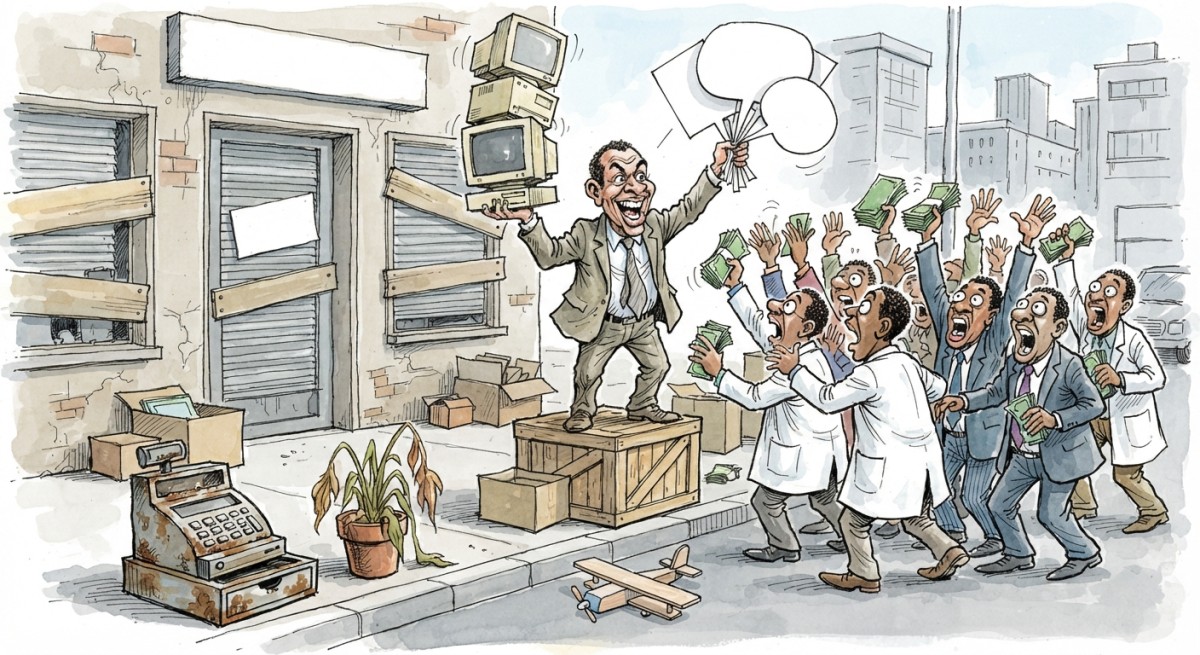
The business briefing for Tuesday evening did not lead with a quarterly profit. It led with a closed office, a Slack archive, and a yard sale in which the leftover chat was the only item anyone wanted to buy. On Tuesday evening in the United States, the New York Post reported that a growing class of data brokers is purchasing the digital remnants of defunct businesses — Slack messages, employee presentations, and years of shop-floor records from former manufacturers — and licensing them to frontier AI labs as training material. The brokers, including firms such as Micro1 and Mercor that launched in the last two years and are already valued in the billions, have discovered a market in the files nobody was trying to keep. If a company is going to close, congratulations: the all-hands deck that everyone skipped the first time has been asked to report for a second career, and it now has a price.
The most photogenic remnant in Tuesday's coverage belonged to an airline that is no longer flying and an inbox that has declined to retire. The New York Post held up Spirit Airlines, which filed for Chapter 11 in late 2024 and halted operations in May, as a prominent example of a closed business whose operational data had become one of its most valuable leftovers, at a reported price of around $10 million. Reuters, in a Tuesday dispatch from Washington by David Shepardson, put a name and a calendar on the bid: Alphabet's Google won an auction in August for data from emails, spreadsheets and calendars, as well as marketing, productivity and operations, in a proposed $10 million purchase intended to train AI models. On Tuesday, Google agreed to additional privacy protections after a union challenge, including a more rigorous de-identification process and the exclusion of significant employee data such as health and medical information, clearing the way for a bankruptcy judge to consider the sale next week. Google, which did not immediately comment on Tuesday, said last month it was not looking to buy personal information and that anything it received would be excluded or de-identified first. The deal is not closed. The leftover mail has simply been given a court date, which is the most formal invitation an inbox has ever received after the planes stopped leaving.
The official record of the wider trade is almost cheerfully blunt, which is how you know the middlemen have already done the math. "We believe this market is going to be one of the largest markets in the world. It's also going to be one of the largest job sectors," Micro1 chief executive Ali Ansari told the New York Post, estimating that annual spending on data by AI labs, enterprises, and robotics companies has grown from roughly $2 billion a few years ago to nearly $50 billion today and could, in his forecast, approach $1 trillion a year. About 200 businesses a day now sign up to explore licensing their data to Micro1, though the smallest rarely make it through the process because they do not produce data with enough volume or complexity to be worth buying. Most of the companies the firm works with have between 30 and 150 employees, Ansari said, and payments can range from a couple of hundred thousand dollars to a few million, a sum the paper noted could represent a substantial share of a small company's annual revenue. In the usual dialect of a shutdown, the valuable things are the lease, the vans, and whatever is still in the till. In this dialect, the valuable thing is the thread about the printer.
The product itself is being introduced with a kind of paperwork optimism that would like to be taken as a completed thought. Sources told the New York Post the data is anonymized, with names and identifying details replaced by generic information so the material cannot be traced back to a specific person, or, as the paper put it, "at least that is the hope." The purpose, in this telling, is to train agents rather than keep a directory. "Of course, the caveat is that these systems are not perfect," Ansari admitted, which is not a sentence that has ever calmed a filing cabinet. A traditional archive is a place you put things so you will not have to look at them again. This archive is being dressed for a laboratory and told it has a future in specialized knowledge, updated laws, and whatever else a model has not yet been fed. The Slack message, which was ignored when it was merely a message, has been informed it is now inventory. It has not been asked whether it would like the promotion.
The longer briefing, running behind the closed doors and the bid sheets, would like this to be remembered as a new revenue line that just happens to involve other people's old presentations. Ansari said he had heard the practice help some businesses avoid bankruptcy, that companies are now reaching out in hopes of being paid for their data, and that successful brokers are already bragging they can make millions in a single week. "It can be quite lucrative," he said. He also predicted that data licensing would become as common for businesses as advertising, "like a revenue line item that touches on data licensing." "We're just in the very early days of that," he added, and later described the ongoing demand as "an infinite last mile." That is the product pitch. The demonstration the market chose to hold up on Tuesday was not a living company's neatly packaged dataset. It was the leftover chat of offices that had already gone dark, and, in the airline's case, an inbox still waiting for a judge. A frontier lab has been asked, this year, to learn from books, from the open web, and from people who are still answering the phone. On Tuesday it was asked to learn from the file room after the lights were turned off. The advertising comparison will, the brokers say, come later. The archive got there first.
Until commerce invents a quieter way to announce that a closed company's Slack thread has a price, a two-year-old broker is already talking in trillions, and a grounded airline's inbox has been given a $10 million hearing, the honest takeaway is narrower and funnier. A business can now fail at its original product and still be told that the leftover chat is one of the most valuable things it has left. The New York Post has the Tuesday evening write-up. Reuters has the court calendar. No sale order has been entered for the airline's files, which is the first time a pile of mail has ever needed a judge and then had to sit through a privacy meeting on the way in. Further details, the field says, will have to wait for a laboratory that has actually opened the archive and for a closed office that can list "leftover Slack" next to advertising on a regular statement. The chairs are still in the parking lot. The briefing, for the moment, is more interested in the login.
Questions Still Sitting in a Closed Office After the Leftover Chat Learned It Had a Price
What's Your Reaction?
 Like
0
 Dislike
0
 Love
0
 Funny
0
 Wow
0
 Sad
0
 Angry
0
Comments (0)