

University Seismologists Enter Four of the Top 10 Official UteQuakes From One Rivalry Game, Clock a Late Interception at 0.0057 Millimeters, and Then Confirm: "That's How Much the Ground Moved"
Thursday evening, a fresh write-up was circulating that Saturday's Utah-BYU rivalry game has been filed as a UteQuake extravaganza. University of Utah seismologists, who measure the ground under Rice-Eccles Stadium, said the 28-20 win produced four of the 10 strongest UteQuakes on record, as measured by a seismometer under the west side of the stands. No new record was set. A game-clinching interception with 13 seconds left moved the ground 0.0057 millimeters for nearly 30 seconds, just short of the 0.0059-millimeter mark set in October. "That's how much the ground moved," said Jamie Farrell, who also noted that six of the top 10 official jolts have come from unexpected defensive plays. The official record of the evening is a rivalry filed as four earthquakes, an interception that almost set a seismic record, and a planet that officially noticed by 0.0057 millimeters.

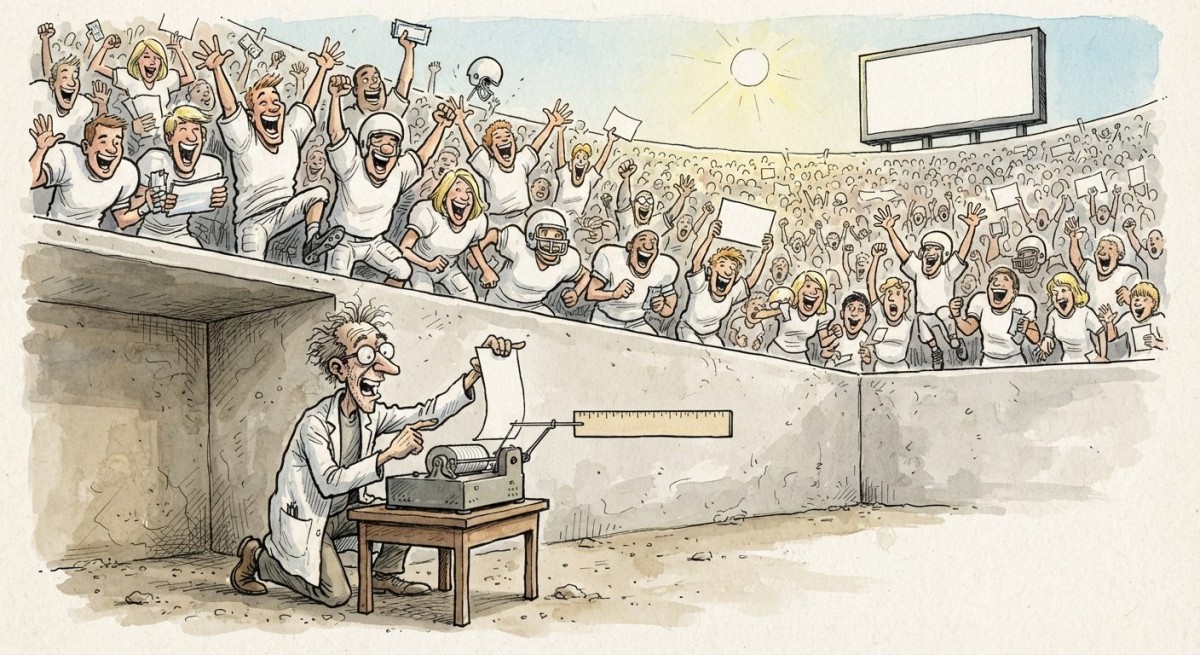
The science briefing for Thursday evening did not lead with a new fault line, a volcanic eruption, or a tremor that had already agreed to be felt without instruments. It led with a rivalry game, a seismometer under the west stand, and an official notice that Saturday's football has been entered in the seismic books as a UteQuake extravaganza. University of Utah seismologists reported that the Utes' 28-20 win over BYU produced four of the 10 strongest UteQuakes recorded in a project that has now monitored about 28 home games at Rice-Eccles Stadium since 2023. No new record was set. The official dialect for this is ground displacement. The unofficial one is an earthquake so well-behaved it has to be measured in thousandths of a millimeter, and then praised for coming close.
The nearest miss arrived with 13 seconds left, when Nate Ritchie's game-clinching interception sent the stands into a peak of 0.0057 millimeters of ground movement that lasted nearly 30 seconds, the third-strongest UteQuake on the official list. The record remains 0.0059 millimeters, set on October 24, when Jackson Bennee sacked Houston's quarterback and forced a late fumble. "That's how much the ground moved," said Jamie Farrell, a research associate professor in the Department of Geology and Geophysics, who watched the seismometer in real time. The official term for Saturday's almost-record is 0.0057 millimeters. The unofficial one is a planet that was asked to tremble, and then submitted a very small form.
The rest of the top-10 paperwork from the same evening is equally precise. Trey Reynolds's interception with 4:49 remaining was filed fifth. Devon Dampier's 22-yard touchdown run at the start of the first quarter was seventh. Braden Pegan's 46-yard touchdown reception was tenth, at nearly 0.004 millimeters. Farrell, who has been running the UteQuake project for four football seasons, noted that six of the top 10 official jolts have come from non-offensive plays. Interceptions, turnovers and sudden returns, he said, are "totally unexpected," whereas a touchdown is, at least on paper, something the crowd has already made room for. The official job of the instrument is to measure the stands. The unofficial one is to confirm that the Earth, like the spectators, is more moved by a surprise.
Nobody has claimed that 0.0057 millimeters is a substitute for a real earthquake, or that a football crowd is required to redraw the fault map. What Thursday's write-up offers instead is a complete sequence: a seismometer under the west side of the stadium, a still-undefeated home side, four entries in the top 10, and a late interception that almost, but did not, take the official record off Houston. The official job of the measurement is to record how much the ground moved. The unofficial one, as now filed, is to prove that a rivalry can be entered as an earthquake provided the number is small enough, and the paperwork is ready.
Thursday's filing, then, is not a new disaster. It is a four-season scientific project, a Saturday game that has been asked to sit the seismic exam, a 0.0057-millimeter almost-record, and a list on which unexpected defensive plays keep outranking the scores that everyone was already expecting. The official record still says no new mark was set. The unofficial one says the ground did, in fact, move, and that it has the millimeters to prove it.
The official record of the evening is a UteQuake extravaganza that failed, just, to break 0.0059 millimeters, a seismometer that has learned to prefer late turnovers, and a planet that noticed a rivalry game by a number so small it had to be written out in full. Thursday did not need a new fault. It needed a football crowd, a very patient instrument, and a confirmation, from the Department of Geology and Geophysics, that that is how much the ground moved.
Questions Still Waiting on the Seismometer After a Rivalry Game Was Officially Filed as Four UteQuakes
What's Your Reaction?
 Like
0
 Dislike
0
 Love
0
 Funny
0
 Wow
0
 Sad
0
 Angry
0





Comments (0)