

Google Opens Preorders for $395 "Intelligent Eyewear," Promises Privacy on "Both Sides of the Lens," and Fits Them With a Light That Stops Recording If It Is Covered
Thursday afternoon, a fresh official announcement was circulating that pre-orders have opened for Google's "Intelligent Eyewear," made with Warby Parker, Gentle Monster and Samsung, starting at $395 and due in stores on December 10. The glasses, about 41 grams, let the wearer say "Hey Gemini" or tap the frames to ask about a mural, a bookshelf, or an event poster. Officials promised privacy "on both sides of the lens": Gemini camera visuals are not saved in the history or used to train models or target ads, and bystanders' faces are designed to be redacted first. A light is meant to come on when a photo or video is taken, and the glasses are designed to stop recording if that light is covered or disabled. There is also an off switch, so they can be worn as ordinary glasses. The official record of the afternoon is a $395 pair of frames, a light that objects to being hidden, and a privacy policy for both sides of the lens.

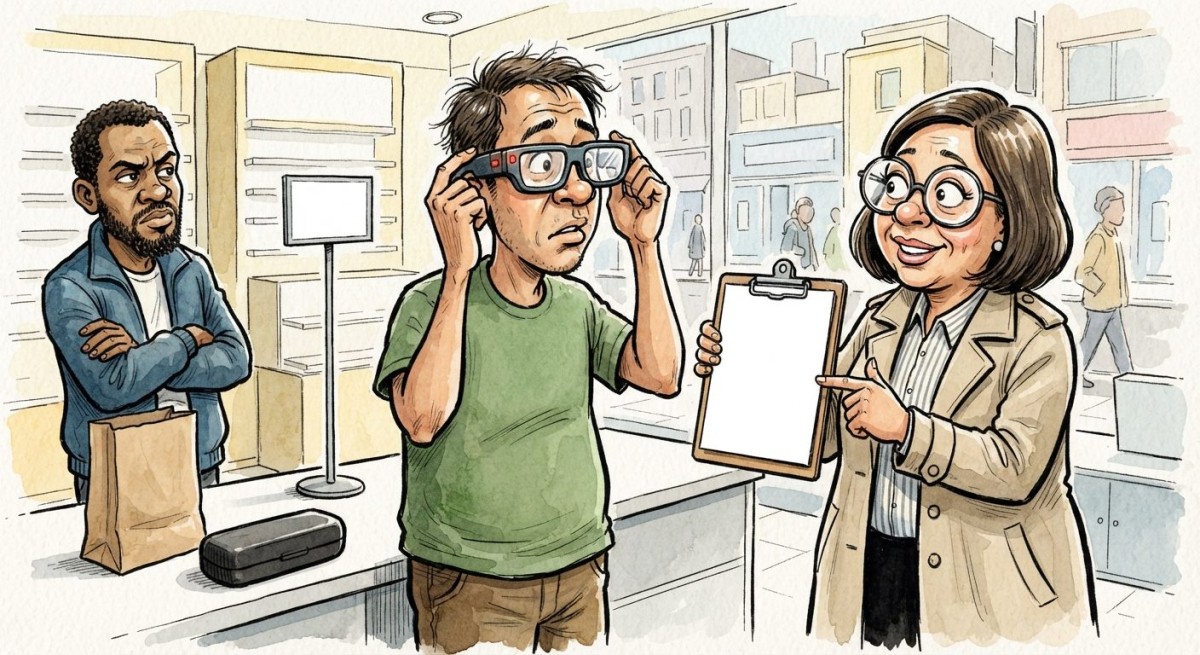
The technology briefing for Thursday afternoon did not lead with a new phone, a new watch, or a computer that had agreed to stay on a desk. It led with a pair of glasses, a pre-order starting at $395, and an official promise that privacy would be observed "on both sides of the lens." Google announced that Intelligent Eyewear, designed with Warby Parker and Gentle Monster and engineered by Samsung, is now available to pre-order, with the frames due in stores on December 10. The official dialect for this is hands-free help from Gemini. The unofficial one is a camera, a microphone, and a light that has been asked to announce itself whenever a picture is being taken.
The Warby Parker styles - Alden, Reid and Wren - start at $395 for optical or sun lenses, in Pine, Saddle and Jet Black, and are being sold in the United States. Gentle Monster's six bolder designs start at $449 and will also be offered in South Korea. The frames weigh about 41 grams, are rated for up to nine hours, and come with a charging case that can refill them up to seven times. Wearers can say "Hey Gemini" or tap the frames to ask about a street-art mural, request a recommendation from a "New Arrivals" bookshelf, or look at an event poster to check the calendar on the spot. They can also add an item to a grocery list with a glance, ask for directions in their ear, or hear a translation in more than 70 languages. The official job of the glasses is to keep the phone in the pocket. The unofficial one is to put a very polite assistant, and a 12-megapixel camera, on the wearer's nose.
Because the frames can see what the wearer sees, the company has filed a rather extensive privacy notice. "When technology can see the world around you, it has a responsibility to the people around you, too," the announcement said. Visuals used by Gemini are not saved in the Gemini history and are not used to train models or target ads, and the glasses are designed to redact bystanders' faces before those images are processed. Data on the frames is encrypted, and so is anything that leaves them in transit. An indicator light is supposed to tell people nearby when a photo or video is being saved, and the glasses are designed to stop recording if that light is covered or disabled. Every pair also has an off switch, so they can be turned "completely off" and worn "as regular glasses only." The official term for this is privacy on both sides of the lens. The unofficial one is a pair of spectacles that has been given a light, a switch, and a formal instruction not to keep working if anyone puts a finger over the lamp.
Thursday's filing, then, is not a surprise return of a screen on the lenses. There is no display in the glass. What there is, instead, is a pre-order, a starting price of $395, a collaboration between a search company, a phone-maker and two eyewear brands, and a list of official promises about what the camera will and will not be allowed to do. The official review of the wearer's surroundings is a mural, a bookshelf, or a poster. The unofficial one is that anyone standing in front of the frames has been asked to trust a light, a redaction step, and an off switch.
The company says pre-orders are live online and in stores, with hands-on demos at selected shops, and that the glasses will need a compatible phone and an eligible account in the United States or South Korea. Support at launch is limited to recent Pixel and Galaxy models and to iPhone 13 Pro and newer. The official promise of December 10 is that the frames will arrive. The unofficial one is that a $395 pair of glasses has already been asked to behave itself in public, and that the light, if covered, is under orders to end the recording.
The official record of the afternoon is an intelligent pair of spectacles, a privacy policy written for both sides of the lens, and a switch that returns them, when required, to being ordinary glasses. Thursday did not need a new pocket computer. It needed a frame, a light that objects to being hidden, and a pre-order that starts at $395.
Questions Still Waiting on Both Sides of the Lens After a $395 Pair of Glasses Was Given a Light and an Off Switch
What's Your Reaction?
 Like
0
 Dislike
0
 Love
0
 Funny
0
 Wow
0
 Sad
0
 Angry
0





Comments (0)